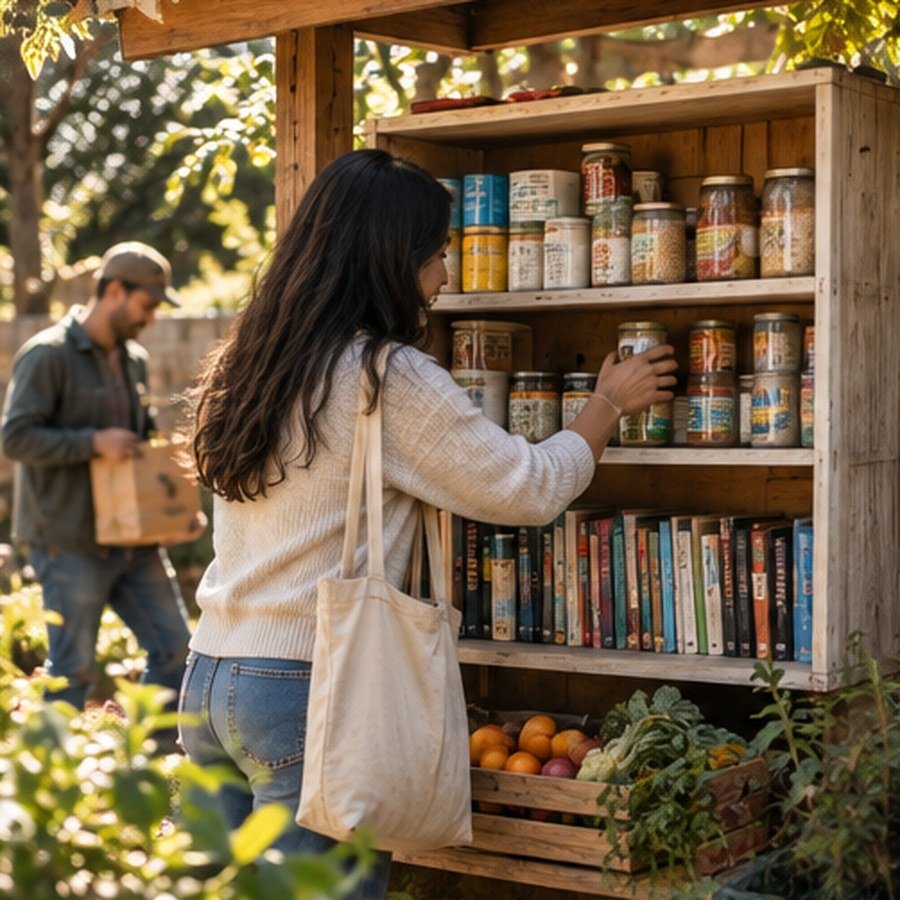
When something valuable is shared without an agreed price or direct repayment, another way of organizing economic life becomes visible. Gift economies are culturally diverse. Many include obligation. This primer names the differences instead of collapsing them.
A forty-five second explanation
People give food, time, care, tools, or knowledge. Sometimes nothing is owed in return. Sometimes a community expects a later gift, a ceremony, or an hour on a ledger. Calling all of that “free” hides the model.
Four distinctions
| Model | What happens | What it is not |
|---|---|---|
| Unconditional gift | No invoice, required repayment, or owed thanks. | Not a claim that the giver feels nothing. |
| Circulating gift | Someone who received help may later help another person, freely. | Not a tracked debt. |
| Community reciprocity | Relationships and duties over time, specific to a culture. | Not anonymous one-way charity. |
| Tracked time-credit | An hour recorded as credit for a later hour. | Not the same as a no-return gift. |
Everyday pictures (not case histories)
A shared meal with no bill. A skill taught without tuition. Source code released under an open license. Each can be a gift, a commons, or a livelihood — the label has to match the rules.
What it is not
- Not a demand that paid workers work for free.
- Not a moral score, karma leaderboard, or ranking of souls.
- Not a claim that markets are evil. A wage, a fair price, and a gift can each be right in different relationships.
For a research overview of gifts in anthropology, see the Open Encyclopedia of Anthropology entry on gifts (checked 2026-10-11).